 A
Finding Your Coastal Style
Finding Your Coastal Style (Without Starting Over)
Moving to the Carolina coast doesn’t mean replacing everything you own. Start with what you love, borrow from local light and landscape, and skip the souvenir-shop look.
 By Jaime Hunter ·
Moving to the North Carolina coast brings a long list of new things: new streets, new neighbors, a new favorite spot for shrimp. It can also bring a nagging question once the boxes come in. Does my furniture belong here?
Many people answer that question by starting over. They buy a houseful of blue-and-white everything, hang a “Life’s a Beach” sign and wonder why the house doesn’t quite feel like theirs. There’s a gentler way. Your coastal style isn’t something you buy. It’s what happens when the things you already love meet the light, colors and textures of where you live now.
A note from Jaime
“Before North Carolina, my family called Louisiana, California and Utah home. Every move taught me the same lesson: you don’t have to leave your style behind. You let the new place add to it.”
That idea shapes how we help people who are new to the coast, whether they’re settling in New Bern, Wilmington, Ocean Isle Beach or North Myrtle Beach. Here’s where to begin.
1. Start with what you already love
Before you shop for anything, walk through your home and notice what you reach for. Maybe it’s the leather chair you’ve had for twenty years, a set of hand-thrown pottery, or a painting from a trip. Those pieces hold your story, and they’re the foundation of your style here, too. Ask yourself what colors, shapes and materials keep showing up. That’s your style. The coast will simply give it a new setting.
2. Let local light do the work
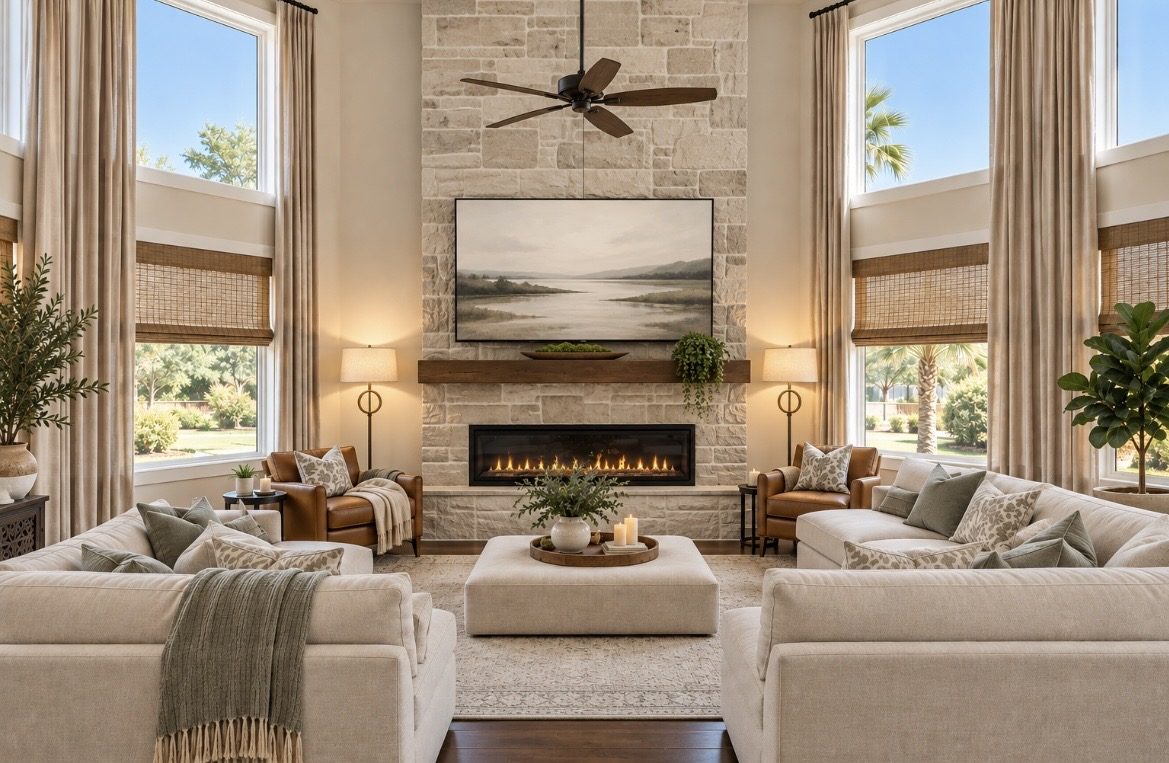
Coastal Carolina light is bright, soft and constantly changing as it bounces off water and sand. It makes warm whites glow and can turn stark, cool whites a little flat. Before choosing paint, test large swatches on several walls and look at them in the morning, at midday and near sunset. Keep window treatments light so that light can reach the room. Linen panels and woven shades are easy, natural choices.
3. Borrow from the landscape, not the gift shop
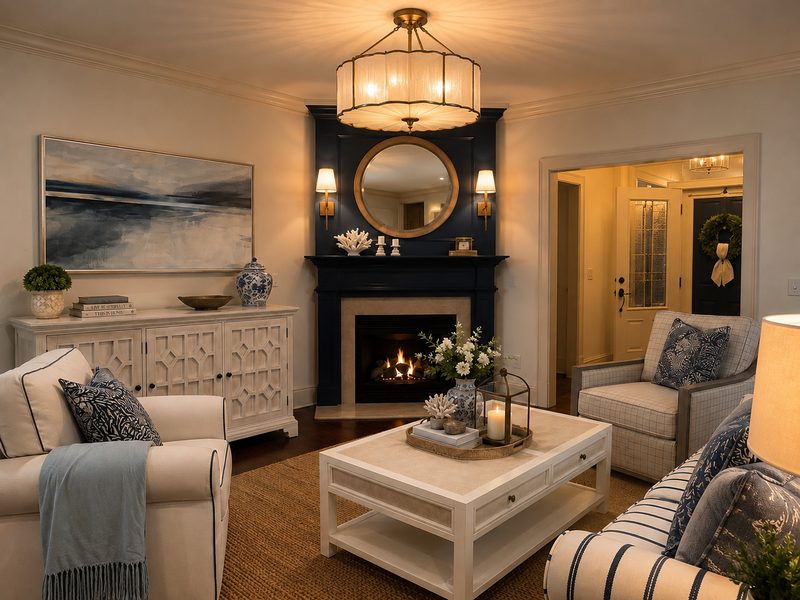
The most convincing coastal rooms take their cues from what’s actually outside: the green-gold of marsh grasses, the silvery gray of driftwood, the pale sand of the beach and the soft blue-gray of the sound on a cloudy day. Bring those in through materials:
- Weathered or wire-brushed wood on a dining table or side tables
- Linen and cotton upholstery, slipcovers and bedding
- Jute, sisal or seagrass rugs
- Rattan, cane and woven baskets
- Stoneware and handmade ceramics with a sandy glaze
These materials work with nearly any style, whether traditional, modern or farmhouse, because they are about texture, not theme.
4. Edit rather than replace
You don’t need new furniture to have a coastal home. Most rooms need editing, not replacing. Pull out a few heavier pieces, such as dark velvet drapes or a bulky armoire, and give the rest more room to breathe. Swap heavy pillows and throws for linen and cotton. Change a lampshade or two from dark to natural. Reupholstering or slipcovering a beloved sofa in a lighter fabric can change a whole room while keeping the piece you love.
5. Mix heirlooms with new coastal pieces
Your grandmother’s mahogany sideboard can look beautiful under a big piece of abstract art in sea-glass tones. A traditional four-poster bed feels fresh with crisp white linen and a woven bench at its foot. The contrast between old and new is what makes a room feel collected and personal instead of bought all at once. A good rule of thumb: for every new piece, keep something with a story.
6. Go easy on the souvenirs
Shells, coral, anchors and rope have a place here, and we use them ourselves. The key is restraint. Choose one or two meaningful accents for a room rather than a collection on every surface. Shells you picked up on your own morning walks mean more than a bag from a store. If a room starts to feel like a gift shop, take half of it away and see how much better it looks.
7. Give it time
Live in your new home through a season or two before making big decisions. Notice where the afternoon sun lands, which rooms you actually use and what the humidity does to certain fabrics. Your coastal style will become clearer the longer you live here, and the best rooms grow over time.
Your style, at home on the coast
Moving somewhere new is a fresh start, but it doesn’t have to be a blank slate. The pieces you love already tell your story. The coast simply adds a new chapter. If you’re settling in anywhere from New Bern to North Myrtle Beach and want help blending what you have with where you are, we’d love to talk. We listen first. Then we design.
Reach out on our contact page or email contactus@anchorandashdesign.com.
New to the coast? See how we help newcomers make a new house feel like home →